History,Science & Life

  1. 02 — c. 800–500 BCE · Vedic India

    Breath & Ritual

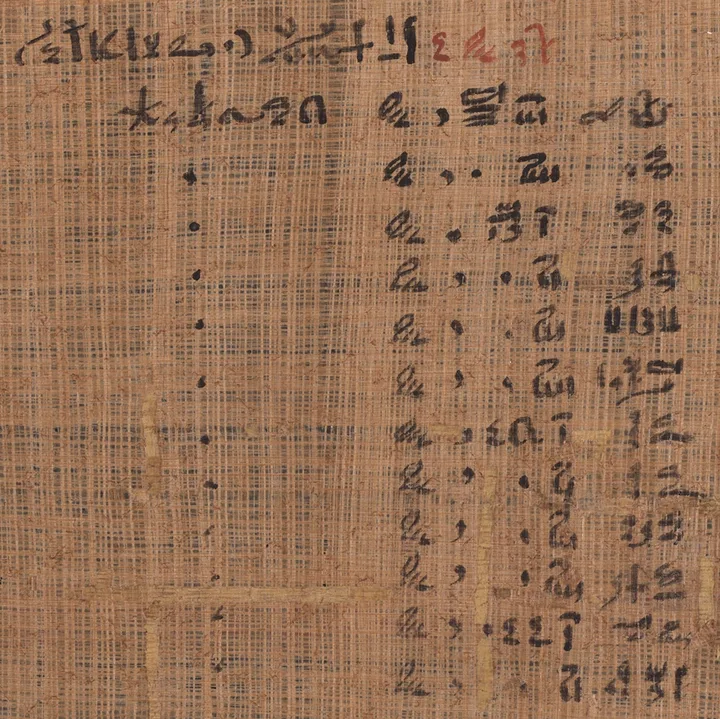
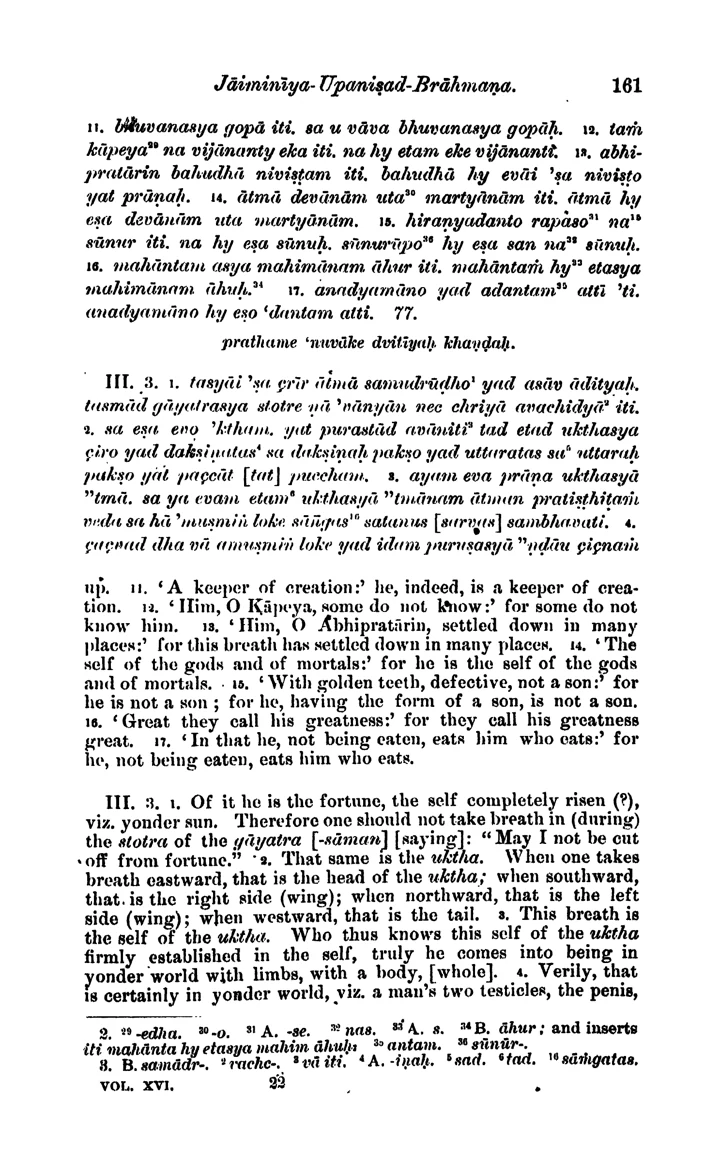
    A Vedic ritual text instructed a chant to be performed without taking another breath.

    Hold to zoom. Hover to zoom. III.3.1, page 161: the cited breath instruction in Oertel’s 1894 printed edition — not an ancient manuscript. Hooghly Mohsin College copy · Digital Library of India, scanned by C-DAK, Kolkata · Hanns Oertel / American Oriental Society, New Haven · Public domain — image source (opens in a new tab)
    Details & sources

    The dating of Vedic texts is approximate.

    This is a ritual instruction about breath, not an equal inhale/exhale practice.

    • Jāiminīya Upaniṣad Brāhmaṇa III.3.1
  2. 03 — Early Buddhism

    Breath & Awareness

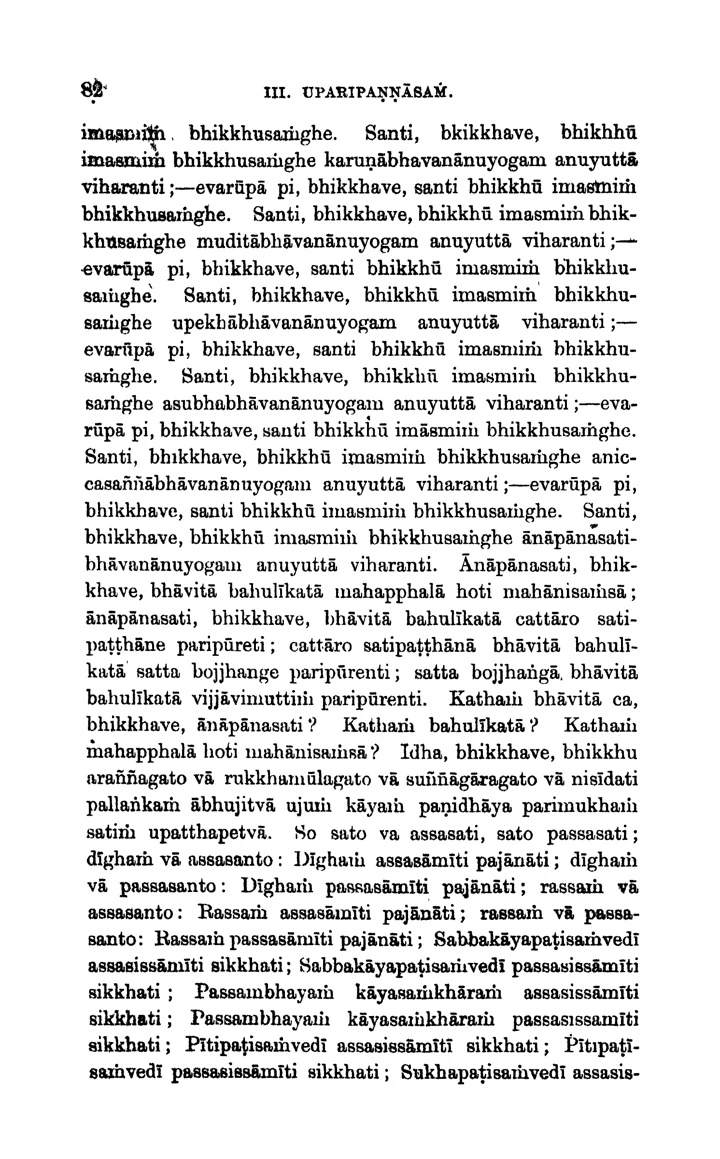
    Buddhist teachings describe awareness of long and short breaths.

    Hold to zoom. Hover to zoom. Ānāpānasati Sutta (MN 118), page 82 of the 1899 printed Pali edition — the long- and short-breath teaching, not an ancient manuscript. Central Library, Visva-Bharati copy · Digital Library of India · Robert Chalmers / Pali Text Society, London, 1899 · Public domain — image source (opens in a new tab)
    Details & sources

    The precise historical dating of these teachings remains approximate.

    • Early Buddhist breath-awareness teachings, including Ānāpānasati
  3. 05 — Late 13th Century · Jewish Mysticism

    Breath & Sacred Letters

    Abraham Abulafia connected the recitation of Hebrew letters with controlled breathing.

    Details & sources

    This is regulated breathing within a contemplative practice, not explicit equal inhale/exhale breathing.

  4. 06 — 15th Century · Hatha Yoga

    Breath Beyond Stillness

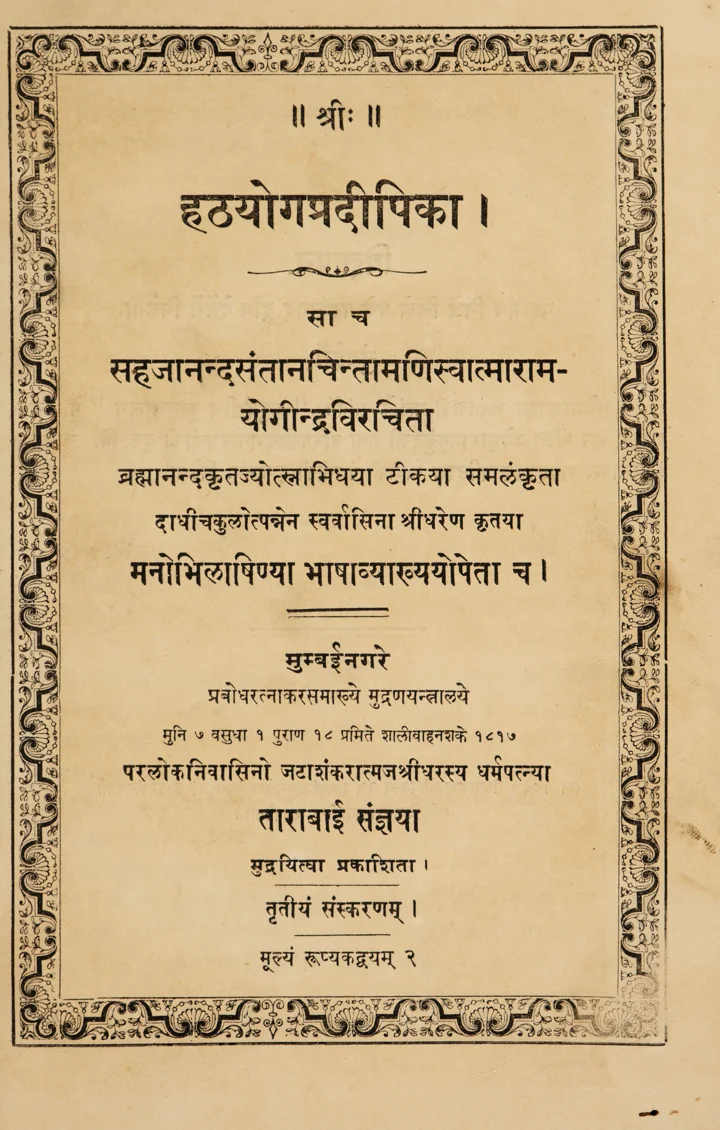
    The Haṭhayogapradīpikā described a breathing practice that could also be performed while walking or standing.

    Hold to zoom. Hover to zoom. Title page of Svātmārāma’s Haṭhayogapradīpikā with Sanskrit and Hindi commentaries — third edition, Mumbai, 1895; a printed historical edition, not a fifteenth-century manuscript or the cited verse page. Wellcome Collection, b30095013, scan 0005 · Prabodharatnākara Press, 1895 · Public domain — image source (opens in a new tab)
    Details & sources

    Scholarly note: this particular practice could include breath retention.

    • Haṭhayogapradīpikā 2.53
  5. 07 — 16th Century · Sufism & Christianity

    Breath & Prayer

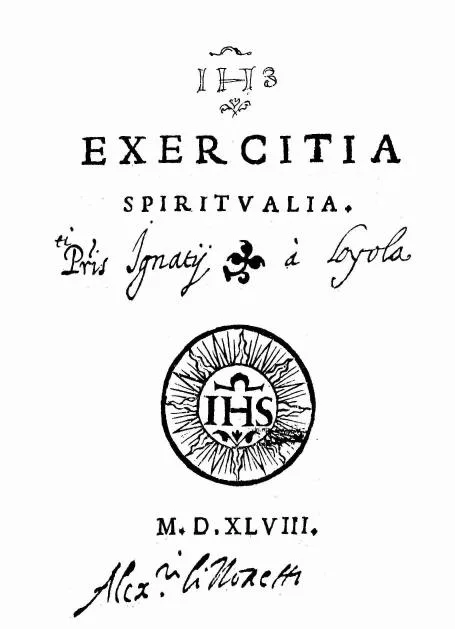
    Sufi teachings emphasized awareness with every breath. Christian spiritual exercises also connected prayer with the rhythm of breathing.

    Ignatius of Loyola, Exercitia spiritualia — first edition, Rome, 1548. Illustrates the Christian tradition only. First edition, via Wikimedia Commons · Public domain — image source (opens in a new tab)
    Details & sources

    These are two separate traditions, referenced independently.

    • Sufism: the Naqshbandi tradition
    • Christianity: Ignatius of Loyola, Spiritual Exercises
  6. 09 — 1935 · Swami Sivananda

    Six OMs In. Six OMs Out.

    A modern yoga text describes rhythmic breathing with equal counts for inhalation and exhalation.

    Details & sources

    The book was first published in 1935; the specific passage was verified in a later edition.

  7. Different cultures.Different practices.One breath.

    What did science discover?

  8. 01 — 1979 · Garssen

    Can Breathing Synchronize?

    Garssen observed brief synchronization while participants watched and heard another person breathing.

    Two breathing rhythms momentarily aligning. Illustrative diagram, not study data.
    Details & sources

    Participants: 21.

    Method: participants watched a video in which another person’s breathing was both visible and audible.

    Finding: a small, transient cycle-by-cycle synchronization effect.

    Limitation: no sustained shift in average respiratory frequency was demonstrated, and the visual and auditory contributions were not isolated.

    Relevant to automatic breathing synchronization — but not proof that sound alone can reliably entrain a listener.

  9. 03 — 2005 · Stephen Elliott

    Coherent Breathing.

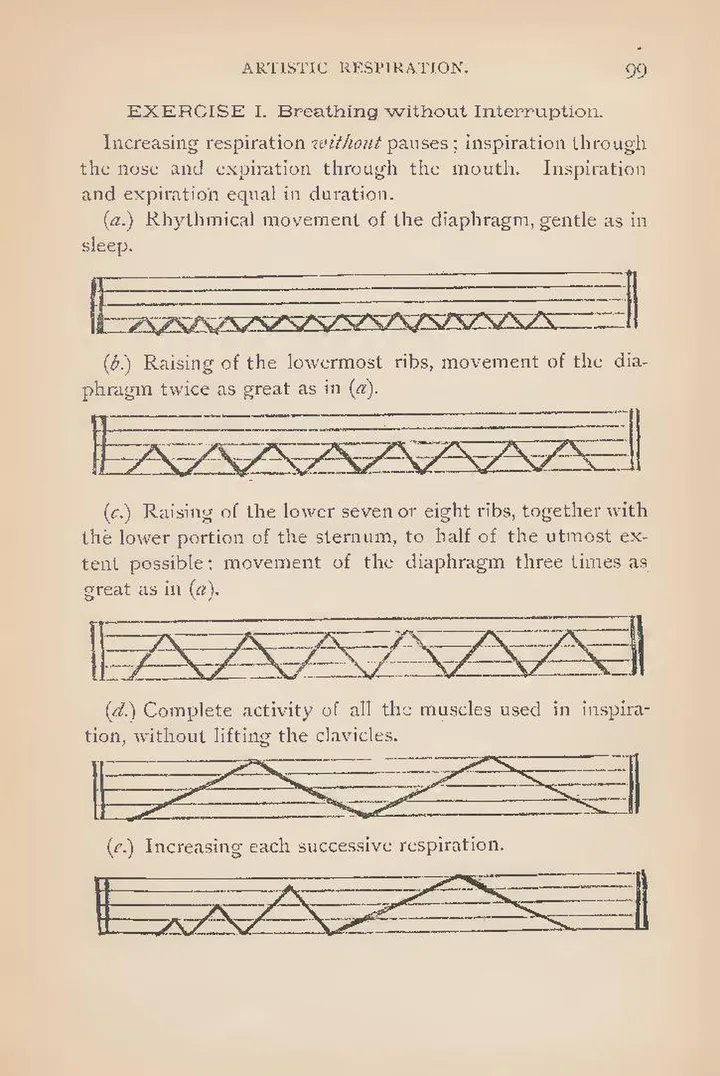
    Stephen Elliott described a modern breathing method built around equally timed inhalation and exhalation.

    inout
    Equal inhale and exhale (1:1). Illustrative diagram, not study data.
    Details & sources

    Method: Coherent Breathing, at a nominal rhythm of approximately 5 breaths per minute with equal inhalation and exhalation.

    Emphasis on relaxed breathing and regular practice.

    Limitation: a practitioner methodology, not a standalone controlled clinical experiment.

  10. 04 — 2013 · Mason et al.

    Symmetry & the Baroreflex.

    Equal inhalation and exhalation at six breaths per minute produced the strongest baroreflex response among the breathing patterns tested.

    pressurebrainstemheart rate
    The baroreflex: pressure sensors signal the brainstem, which adjusts heart rate. Illustrative diagram, not study data.
    Details & sources

    Participants: 17 yoga-naive adults.

    Method: slow breathing compared across different inhale/exhale ratios, with and without ujjayi (airway resistance).

    Finding: equal inhalation and exhalation without added ujjayi resistance produced the largest baroreflex sensitivity increase and blood-pressure reduction among the tested conditions.

    Limitation: an acute physiological study with a small sample.

  11. 05 — 2014 · Lin, Tai & Fan

    5.5 Breaths per Minute.

    Equal inhalation and exhalation at 5.5 breaths per minute produced higher values of selected HRV measures than the other breathing patterns tested.

    The four tested protocols

    • 5.5 breaths/min · I:E 5:5in ≈ 5.45 s · out ≈ 5.45 sHigher SDNN and LF power than the other three
    • 5.5 breaths/min · I:E 4:6in ≈ 4.36 s · out ≈ 6.55 s
    • 6 breaths/min · I:E 5:5in 5 s · out 5 s
    • 6 breaths/min · I:E 4:6in 4 s · out 6 s
    Qualitative comparison of the study’s four protocols. Bars show the inhale/exhale split of one breath, not HRV values. iRevoL’s 5.5 s + 5.5 s ≈ 5.45 breaths/min — very close, not identical.
    Details & sources

    Participants: 47 healthy college students.

    Method: four paced patterns — 5.5 breaths/min at I:E 5:5 and 4:6, and 6 breaths/min at I:E 5:5 and 4:6.

    Finding: the 5.5 breaths/min, 5:5 condition produced higher SDNN and low-frequency HRV power than the other three tested patterns.

    Limitation: a comparison of four patterns, not of every possible rhythm; acute HRV changes do not establish long-term benefit, and individual resonance frequencies can differ.

  12. 06 — 2021 · Zepf / Van Kerrebroeck & Maes

    Can Sound Guide Breathing?

    Researchers explored acoustic guidance and breathing-like sounds as ways to influence breathing, including during other activities.

    Sound and breath, side by side. Illustrative diagram, not study data.
    Zepf et al. — guidance while driving

    Participants: 12.

    Method: breath-triggered acoustic, haptic and combined guidance, tested in a driving context, using real-time respiration monitoring and adaptive feedback.

    Finding: acoustic and combined guidance reduced respiratory pace without an observed reduction in focus.

    Limitation: adaptive biofeedback is not the same as passive synchronization with a prerecorded breathing sound.

    Van Kerrebroeck & Maes — breathing sonification

    Method: breathing sonification, including a synthesized breathing-like sound, across adaptive and guided breathing protocols.

    The method involved participant cooperation and other breathing constraints.

    Limitation: not proof of fully passive, automatic synchronization with prerecorded sound.

  13. 2022

    I began rediscovering the world. This time,
    in Harmony.

    1. 07 — 2023 · Brown & Gerbarg

      Breathing as Daily Practice.

      Coherent breathing continued to be explored as part of structured, regularly practiced mind-body programs.

      Details & sources

      Participants: 12 medical students enrolled; six completed the six-week follow-up.

      Method: a Breath–Body–Mind pilot including equal inhale/exhale coherent breathing at approximately five cycles per minute, alongside other techniques.

      Limitation: outcomes cannot be attributed exclusively to 1:1 breathing; a small, preliminary study, not independent proof of long-term effectiveness.

    2. 08 — 2025 · Marchant / Canazei

      Recovery & Regulation.

      Research explored how slow, controlled breathing affects heart rate variability and recovery from stress.

      Marchant et al. — four breathing patterns

      Participants: 84.

      Method: compared box breathing, 4-7-8 breathing, 6 breaths/min at I:E 4:6 and 6 breaths/min at I:E 5:5.

      Measures: HRV, end-tidal CO2 and mood.

      Respiratory nuance: end-tidal CO2 was measured because breathing patterns can differ in how they affect exhaled CO2, so HRV results should be read together with the respiratory measures — see the original paper for the exact results.

      Limitation: short-term experimental research; this page does not claim a proven superiority of 1:1 over 4:6.

      Canazei et al. — recovery after stress

      Participants: 80.

      Method: individually tailored resonant breathing during 5-minute light-guided recovery periods after laboratory stressors.

      Finding: improvements in some HRV and perceived-strain outcomes relative to passive rest.

      Limitation: visual guidance, not auditory or automatic entrainment; short-term experimental research.

    3. 09 — 2026 · Chiron et al.

      Beyond the Breathing Session.

      An eight-day study with athletes found changes in recovery-related physiological measures during a coherent-breathing program.

      Details & sources

      Participants: 22 athletes, assigned to intervention and control groups.

      Method: an eight-day protocol involving simulated competitions.

      Finding: differences in RMSSD, cortisol response, certain inflammatory markers and sleep-related outcomes.

      Limitation: a short study of only eight days with a small, specific athletic sample; no significant improvement in athletic performance between groups.

    1. Science often studies breathingfor minutes at a time.

      In controlled conditions.With limited participants.

      But we breathefor a lifetime.

      While working.While moving.While living.

      What could we discover ifwe studied breathing in real life?

  14. 2026

    I wrote about…

From ancient traditions and modern laboratories into real life.

A SelfLove RevoLution.

Why iRevoL?